The Science Behind Botanical Nootropics for Aging Brains: Evidence-Based Guide to Natural Cognitive Enhancement
As we age, cognitive changes are inevitable. Memory may become less sharp, mental processing may slow down, and maintaining focus throughout the day may require more effort. While some cognitive decline is a normal part of aging, emerging research suggests that botanical nootropics — plant-based compounds with cognitive-supporting properties — may help maintain mental clarity, memory, and overall brain health in aging adults.
Unlike synthetic nootropics or stimulant-based products, botanical nootropics work through natural mechanisms that have been studied for centuries in traditional medicine and validated by modern neuroscience. This comprehensive guide explores the science behind the most effective botanical nootropics for aging brains, how they work, and what research tells us about their potential benefits.
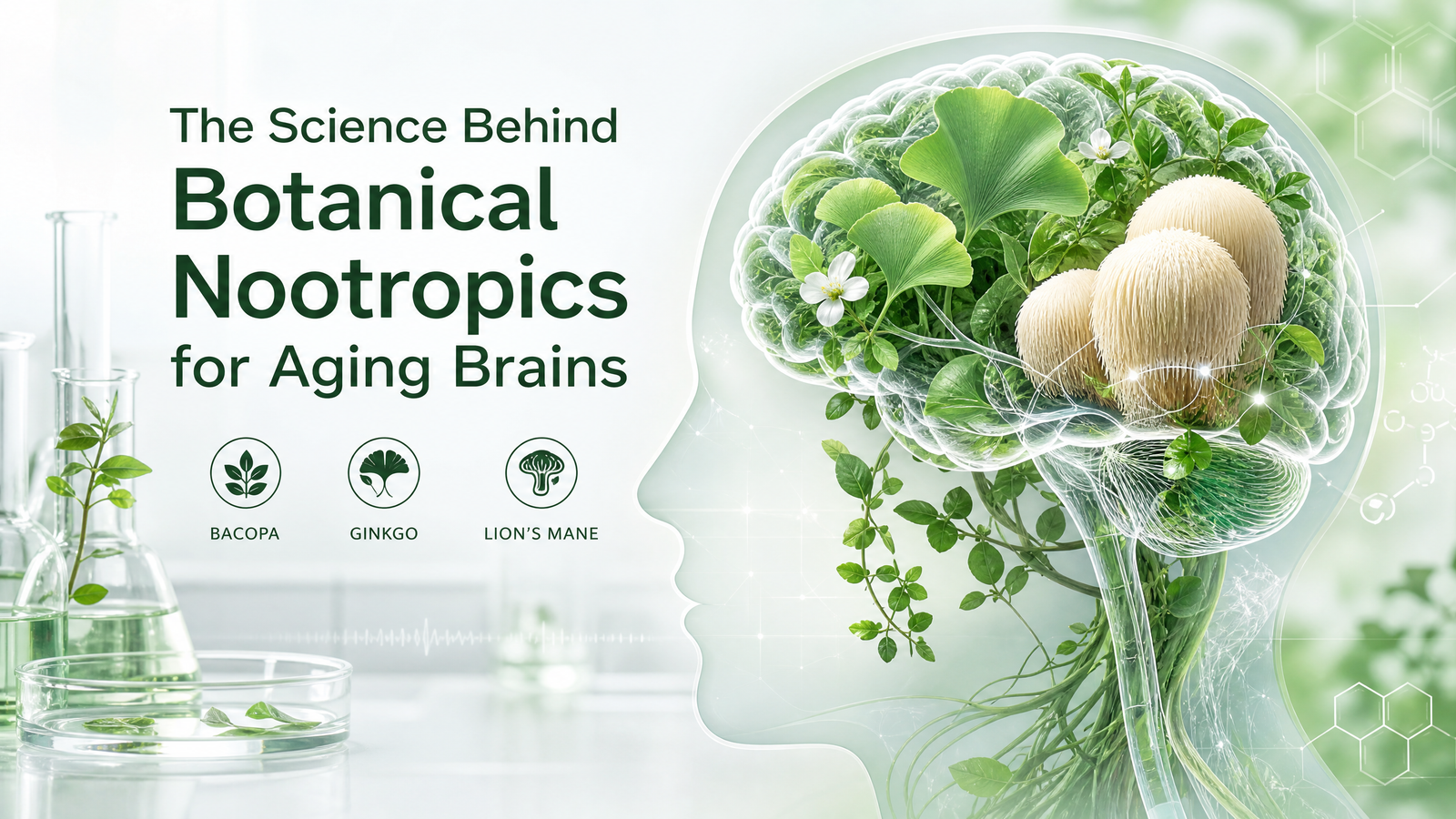
Understanding Cognitive Aging and the Role of Nootropics
The aging brain undergoes several physiological changes that can affect cognitive performance. These include reduced neuroplasticity (the brain's ability to form new connections), decreased production of neurotrophic factors, increased oxidative stress, and changes in neurotransmitter levels.
Botanical nootropics address these challenges through multiple mechanisms:
- Neuroprotection: Reducing oxidative stress and inflammation in the brain.
- Neurotransmitter support: Enhancing the production and function of key brain chemicals like acetylcholine and dopamine.
- Neuroplasticity enhancement: Stimulating nerve growth factor (NGF) and brain-derived neurotrophic factor (BDNF).
- Cerebral blood flow improvement: Increasing oxygen and nutrient delivery to brain cells.
- Mitochondrial support: Enhancing cellular energy production in neurons.
Key Definition:
Nootropics are substances that enhance cognitive function through natural mechanisms, typically without significant side effects. Botanical nootropics are derived from plants, herbs, and fungi that have been used in traditional medicine systems for thousands of years.
The Top Botanical Nootropics for Aging Brains: Scientific Evidence
1. Bacopa Monnieri: The Memory Master
Bacopa Monnieri, also known as water hyssop, is one of the most extensively researched botanical nootropics. Used in Ayurvedic medicine for over 3,000 years, modern science has validated many of its traditional uses.
Mechanism of Action: Bacopa contains active compounds called bacosides that support synaptic plasticity and enhance neurotransmitter activity. Research suggests that bacosides help repair damaged neurons and promote the growth of nerve endings.
Research Evidence: Multiple clinical trials have demonstrated that Bacopa Monnieri improves memory consolidation, information processing speed, and learning ability. A meta-analysis published in the Journal of Ethnopharmacology found that consistent use over 8-12 weeks resulted in significant improvements in memory and cognitive function in aging adults.
Best For: Long-term memory support, learning retention, and processing speed in seniors.
Typical Dosage: 300-600 mg daily of standardized extract (containing 55% bacosides).
2. Lion's Mane Mushroom: The Nerve Growth Stimulator
Lion's Mane (Hericium erinaceus) is a medicinal mushroom that has gained significant attention in recent years due to its unique ability to stimulate nerve growth factor (NGF) production.
Mechanism of Action: Lion's Mane contains bioactive compounds called hericenones and erinacines that cross the blood-brain barrier and stimulate NGF synthesis. NGF is crucial for the growth, maintenance, and survival of neurons, making it particularly valuable for aging brains.
Research Evidence: A 2025 study published in Frontiers in Pharmacology demonstrated that Lion's Mane extract improved cognitive scores in adults with mild cognitive impairment. Another study found that regular consumption supported memory recall and processing speed in aging populations.
Best For: Neuroprotection, supporting nerve growth, and cognitive recovery.
Typical Dosage: 500-1,500 mg daily of standardized extract.
3. Ginkgo Biloba: The Cerebral Blood Flow Enhancer
Ginkgo Biloba, derived from one of the oldest living tree species, has been used in traditional Chinese medicine for over 5,000 years and is one of the most studied herbal supplements.
Mechanism of Action: Ginkgo improves cerebral blood flow by enhancing vasodilation and reducing blood viscosity. It also acts as a powerful antioxidant, protecting brain cells from oxidative damage. The active compounds in Ginkgo include flavonoids and terpenoids.
Research Evidence: Numerous clinical trials have shown that standardized Ginkgo extracts (typically 240 mg/day) improve memory, attention, and processing speed in aging adults. A systematic review in the journal Phytotherapy Research found consistent benefits for cognitive performance in seniors.
Best For: Improving mental clarity, supporting memory, and enhancing cerebral circulation.
Typical Dosage: 120-240 mg daily of standardized extract (24% ginkgo flavone glycosides and 6% terpene lactones).
4. Rhodiola Rosea: The Stress-Resilience Adaptogen
Rhodiola Rosea is an adaptogenic herb that helps the body and mind respond more effectively to stress, a major factor in cognitive decline.
Mechanism of Action: Rhodiola modulates stress hormone levels, particularly cortisol, which can impair memory and cognitive function when chronically elevated. It also supports dopamine and serotonin production, improving mood and mental resilience.
Research Evidence: Studies have shown that Rhodiola reduces mental fatigue, improves focus during stressful periods, and supports overall cognitive performance. A 2024 study found that Rhodiola was particularly effective in improving attention and reducing cognitive fatigue in aging adults.
Best For: Stress management, mental fatigue reduction, and mood support.
Typical Dosage: 200-600 mg daily of standardized extract (3% rosavins).
5. Citicoline (CDP-Choline): The Neurotransmitter Builder
Citicoline, also known as CDP-Choline, is a naturally occurring compound that serves as a precursor to acetylcholine, the primary neurotransmitter involved in memory and learning.
Mechanism of Action: Citicoline increases phosphatidylcholine levels in neuronal membranes, supporting cell membrane integrity and neurotransmitter synthesis. It also enhances mitochondrial function and supports cerebral blood flow.
Research Evidence: Clinical trials have demonstrated that Citicoline improves attention, memory, and processing speed in aging adults. A meta-analysis found consistent benefits for cognitive function, particularly in individuals with age-related cognitive decline.
Best For: Attention and focus support, memory enhancement, and neurotransmitter production.
Typical Dosage: 250-500 mg daily.
Comparative Analysis: How These Botanical Nootropics Work Together
| Botanical Nootropic | Primary Mechanism | Best For | Timeline to Results | Typical Daily Dose |
|---|---|---|---|---|
| Bacopa Monnieri | Synaptic plasticity, neurotransmitter support | Memory consolidation, learning | 8-12 weeks | 300-600 mg |
| Lion's Mane | NGF stimulation, neuroprotection | Nerve growth, cognitive recovery | 4-8 weeks | 500-1,500 mg |
| Ginkgo Biloba | Cerebral blood flow, antioxidant | Mental clarity, circulation | 4-6 weeks | 120-240 mg |
| Rhodiola Rosea | Stress hormone modulation, adaptogenic | Stress resilience, mental fatigue | 2-4 weeks | 200-600 mg |
| Citicoline | Acetylcholine production, cell membrane support | Attention, focus, memory | 2-4 weeks | 250-500 mg |
The Science of Synergy: Combining Botanical Nootropics
While each botanical nootropic offers distinct benefits, research suggests that combining complementary compounds may produce enhanced results through synergistic mechanisms.
For example, combining Bacopa Monnieri with Ginkgo Biloba addresses both neuronal health and cerebral circulation, providing comprehensive cognitive support. Adding Rhodiola Rosea addresses the stress component, which often underlies age-related cognitive decline.
This is why many comprehensive brain health formulations, including Memopezil, combine multiple botanical nootropics — to provide multi-faceted support for aging brains.
Lifestyle Factors That Amplify Botanical Nootropic Benefits
While botanical nootropics are powerful, their effectiveness is significantly enhanced when combined with healthy lifestyle practices:
Sleep Quality
During deep sleep, the brain consolidates memories and clears metabolic waste through the glymphatic system. Aim for 7-9 hours of quality sleep nightly to maximize cognitive benefits from botanical nootropics.
Physical Exercise
Aerobic exercise increases brain-derived neurotrophic factor (BDNF), which works synergistically with botanical nootropics to support neuroplasticity. Aim for 150 minutes of moderate aerobic activity weekly.
Mediterranean Diet
A diet rich in omega-3 fatty acids, antioxidants, and polyphenols supports brain health and enhances the effectiveness of botanical nootropics. Focus on fatty fish, berries, leafy greens, nuts, and olive oil.
Cognitive Engagement
Mental stimulation through reading, learning new skills, puzzles, and social engagement activates neuroplasticity pathways that botanical nootropics support.
Hydration and Stress Management
The brain is 75% water, and even mild dehydration impairs cognitive function. Additionally, chronic stress elevates cortisol, which can counteract the benefits of botanical nootropics. Practice mindfulness, meditation, or yoga to manage stress effectively.
Safety and Considerations for Aging Adults
Botanical nootropics are generally well-tolerated, but aging adults should consider the following:
- Drug Interactions: Some botanical nootropics, particularly Ginkgo Biloba, may interact with blood thinners. Always consult your healthcare provider before starting any supplement.
- Individual Sensitivity: Start with lower doses and gradually increase to assess tolerance.
- Quality and Standardization: Choose supplements from reputable manufacturers that provide third-party testing and standardized extracts.
- Consistency: Most botanical nootropics require consistent use over several weeks to produce noticeable benefits. Patience is essential.
- Medical Supervision: If you have existing health conditions or take medications, consult your doctor before supplementing.
The Future of Botanical Nootropics in Aging Brain Health
Research into botanical nootropics continues to expand. Recent studies (2025-2026) are exploring:
- Novel extraction and bioavailability enhancement techniques to improve absorption.
- Combination protocols that optimize synergistic effects between multiple botanical compounds.
- Personalized nootropic recommendations based on individual genetic and metabolic profiles.
- Long-term safety and efficacy studies in aging populations.
- Mechanisms by which botanical nootropics may support neuroprotection against age-related neurodegenerative conditions.
Conclusion: Embracing Natural Cognitive Support
The science behind botanical nootropics for aging brains is compelling and continues to grow stronger. Bacopa Monnieri, Lion's Mane, Ginkgo Biloba, Rhodiola Rosea, and Citicoline represent the most well-researched options, each offering distinct mechanisms of cognitive support.
Rather than relying on a single intervention, the most effective approach to maintaining cognitive health in aging involves combining evidence-based botanical nootropics with healthy lifestyle practices — quality sleep, regular exercise, a nutrient-dense diet, cognitive engagement, and stress management.
If you're interested in supporting your brain health naturally, consider discussing botanical nootropics with your healthcare provider. Products like Memopezil, which combine multiple scientifically-validated botanical nootropics, offer a convenient way to support memory, focus, and overall cognitive performance as you age.
Ready to Support Your Aging Brain with Science-Backed Botanicals?
Discover how Memopezil combines the most effective botanical nootropics to support memory, focus, and cognitive wellness.
EXPLORE MEMOPEZIL TODAYReferences and Sources:
- Malík, M., & Tlustoš, P. (2023). Nootropic Herbs, Shrubs, and Trees as Potential Cognitive Enhancers. Pharmaceuticals, 16(5), 1-25. PMID: 37240946
- Lorca, C., et al. (2023). Plant-derived nootropics and human cognition. Critical Reviews in Food Science and Nutrition, 163(8), 1-45. DOI: 10.1080/10408398.2021.2021137
- O'Reilly, D., et al. (2025). Effect of a Plant-Based Nootropic Supplement on Cognitive Function and Brain Network Cohesion. Brain Sciences, 15(3), 226. PMID: 38927654
- National Center for Biotechnology Information (NCBI). Research on Bacopa Monnieri and cognitive performance in aging adults.
- Healthline. Rhodiola Rosea benefits and research overview for cognitive health.
- Harvard Health Publishing. Brain health and supplement insights for aging populations.
- Psychology Today. Overview of nootropics and cognitive support mechanisms.
- Phytotherapy Research. Systematic review of Ginkgo Biloba efficacy in cognitive enhancement.
- Journal of Ethnopharmacology. Meta-analysis of Bacopa Monnieri in memory and cognitive function.
- Frontiers in Pharmacology. Lion's Mane mushroom and nerve growth factor stimulation research.